Things HRMS Software Can Handle Better Than Traditional HR Methods
Managing people is one of the most important responsibilities in any organisation. From hiring new employees and maintaining records to handling attendance, payroll, performance and employee exits, HR teams manage numerous activities that keep a business running smoothly.
Traditionally, many of these processes have been handled through spreadsheets, paperwork, emails and separate software applications. While these methods may work for smaller teams, they become increasingly difficult to manage as businesses grow. This is where Human Resource Management System (HRMS) software makes a difference.
Rather than replacing HR professionals, HRMS software helps them work more efficiently by automating repetitive tasks, connecting employee information and providing better visibility into workforce operations.
Let's explore what modern HRMS software can handle better than traditional HR management methods.
1. Managing Employee Information in One Place
Traditional HR processes often involve maintaining employee information across multiple files, spreadsheets and physical documents. Finding the latest employee details, tracking changes or updating records can take considerable time.
HRMS software brings employee information into a centralised system, making it easier to manage personal details, designations, departments, salary structures, documents and employment history.
With T3 Softwares HRMS, businesses can maintain connected employee records throughout the employee lifecycle, from onboarding to separation. This helps HR teams reduce duplicate data entry, improve record accuracy and access information more efficiently.
2. Connecting Attendance, Leave and Payroll
One of the biggest differences between traditional HR methods and HRMS software is how employee attendance and payroll are managed.
In manual systems, HR teams may need to collect attendance records, verify leave applications, calculate payable days and coordinate salary information with the accounts department.
An integrated HRMS can connect these activities into one workflow. For example, when an employee's leave is approved, the information can be reflected in attendance and considered during payroll calculations according to company rules.
Modern HRMS solutions can help manage:
- Employee attendance and shift schedules
- Leave applications and approvals
- Paid and unpaid leave
- Overtime and attendance regularisation
- Salary calculations and payroll processing
T3 Softwares HRMS connects attendance, leave and payroll processes, helping organisations reduce repetitive calculations and maintain consistency between employee activity and salary processing.
3. Making Payroll Processing More Efficient
Payroll involves more than simply calculating monthly salaries. Businesses must consider salary structures, attendance, deductions, increments, employee advances and applicable statutory requirements. When these activities are managed through spreadsheets, even small changes may require multiple manual updates.
HRMS software simplifies payroll by applying configured salary and deduction rules to employee records. T3 Softwares HRMS supports payroll processing with features such as salary structures, attendance-based calculations, PF, ESI, Professional Tax, TDS, payslips and payroll reports.
By bringing payroll-related activities together, HRMS software reduces manual effort and makes monthly salary processing more organised and easier to review.
4. Managing the Complete Employee Lifecycle
Traditional HR management often treats recruitment, onboarding, employee development and resignation as separate activities. As a result, information may remain scattered across departments, making it difficult to track an employee's complete journey within the organisation.
HRMS software provides a more connected approach. From joining formalities and document collection to performance reviews, training, salary revisions and exit processes, businesses can manage important employee activities within one system. For example, T3 Softwares HRMS supports employee onboarding checklists, performance appraisals, training programmes, asset allocation, resignation management and full-and-final settlement.
This gives HR teams better visibility into employee-related activities while keeping responsibilities and records organised.
5. Tracking Performance and Employee Development
Employee performance management requires continuous coordination between employees, managers and HR departments. Traditional performance reviews may depend on separate appraisal forms, spreadsheets, emails and manual follow-ups.
HRMS software makes the process more structured by bringing performance information into a central system. It can help organisations manage appraisal cycles, define performance expectations, record evaluations and maintain employee development information.
6. Providing Better Workforce Visibility Through Reports
Traditional HR reporting often requires collecting and combining information from multiple sources before management can review it. For example, preparing a workforce summary may involve separate attendance sheets, employee records, payroll reports and department-wise information.
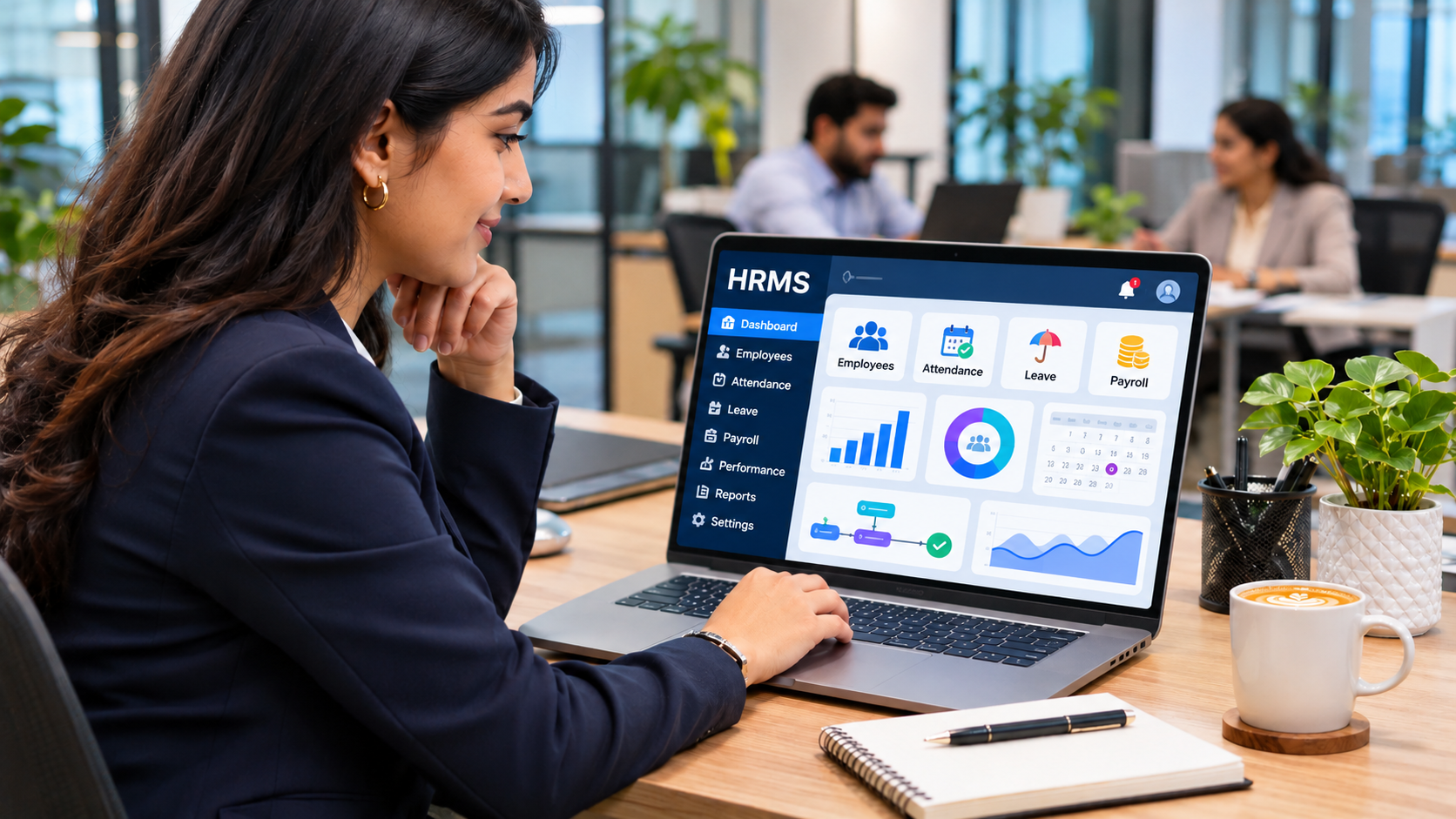
HRMS software simplifies this through connected dashboards and reports. Management can review important workforce information such as employee strength, attendance trends, payroll details, new joiners, separations and department-wise workforce distribution.
Instead of spending excessive time preparing reports, organisations can focus more on understanding their workforce and planning future requirements.
7. Managing HR Operations as the Business Grows
As organisations expand, managing employees across departments, locations or companies becomes more complex. A process that works for a small workforce may not remain efficient when the number of employees, managers and approval levels increases.
Traditional methods often require additional spreadsheets, manual coordination and repeated data updates.
HRMS software provides a more structured approach to managing this growing complexity. For growing businesses, having connected HR processes makes it easier to maintain consistency as teams expand.
Traditional HR Methods vs HRMS Software: What's the Difference?
| HR activity | Traditional HR methods | HRMS software |
|---|---|---|
| Employee records | Multiple files and documents | Centralised employee information |
| Attendance and leave | Separate records and manual updates | Connected attendance and leave workflows |
| Payroll | Repeated manual calculations | Rule-based payroll processing |
| Performance reviews | Paper forms and spreadsheets | Structured appraisal management |
| Employee onboarding | Manual coordination and checklists | Trackable onboarding activities |
| HR reporting | Data collected from multiple sources | Connected reports and dashboards |
| Employee exits | Separate clearance and settlement records | Organised exit and settlement workflows |
The main advantage of HRMS software is not simply automation. It is the ability to connect HR activities that would otherwise be managed separately.
How T3 Softwares Helps Businesses Modernise HR Management
Every organisation has different workforce structures, attendance policies, payroll requirements and approval processes. Choosing an HRMS solution that supports these requirements is important for smooth HR operations.
T3 Softwares offers an integrated HRMS solution designed to help businesses manage employees, attendance, leave, payroll, performance, training and employee separation within a connected platform.
Its HRMS capabilities include:
- Centralised employee information and onboarding
- Attendance, shifts and leave management
- Payroll processing and statutory deductions
- Performance appraisals and training
- Salary increments and employee advances
- Employee asset and exit management
- Workforce reports and management dashboards
- Configurable workflows and role-based access
With HRMS connected to broader ERP and accounting processes, businesses can also improve coordination between HR, payroll, finance and management teams.
Conclusion
Traditional HR methods have supported businesses for years, but growing organisations need more efficient ways to manage increasing workforce responsibilities.
HRMS software helps by connecting employee information, reducing repetitive manual work, simplifying payroll, organising employee lifecycle activities and improving workforce visibility.
Most importantly, HRMS software does not replace the human side of HR. It gives HR professionals more time to focus on employees, workplace culture and business growth. For organisations looking to move beyond disconnected spreadsheets and manual HR processes, adopting an integrated HRMS can be an important step towards more organised workforce management.
Looking to simplify HR operations for your business?
Explore T3 Softwares HRMS Software in Mumbai to discover how a connected HRMS solution can support your employee management, attendance, payroll and workforce operations.