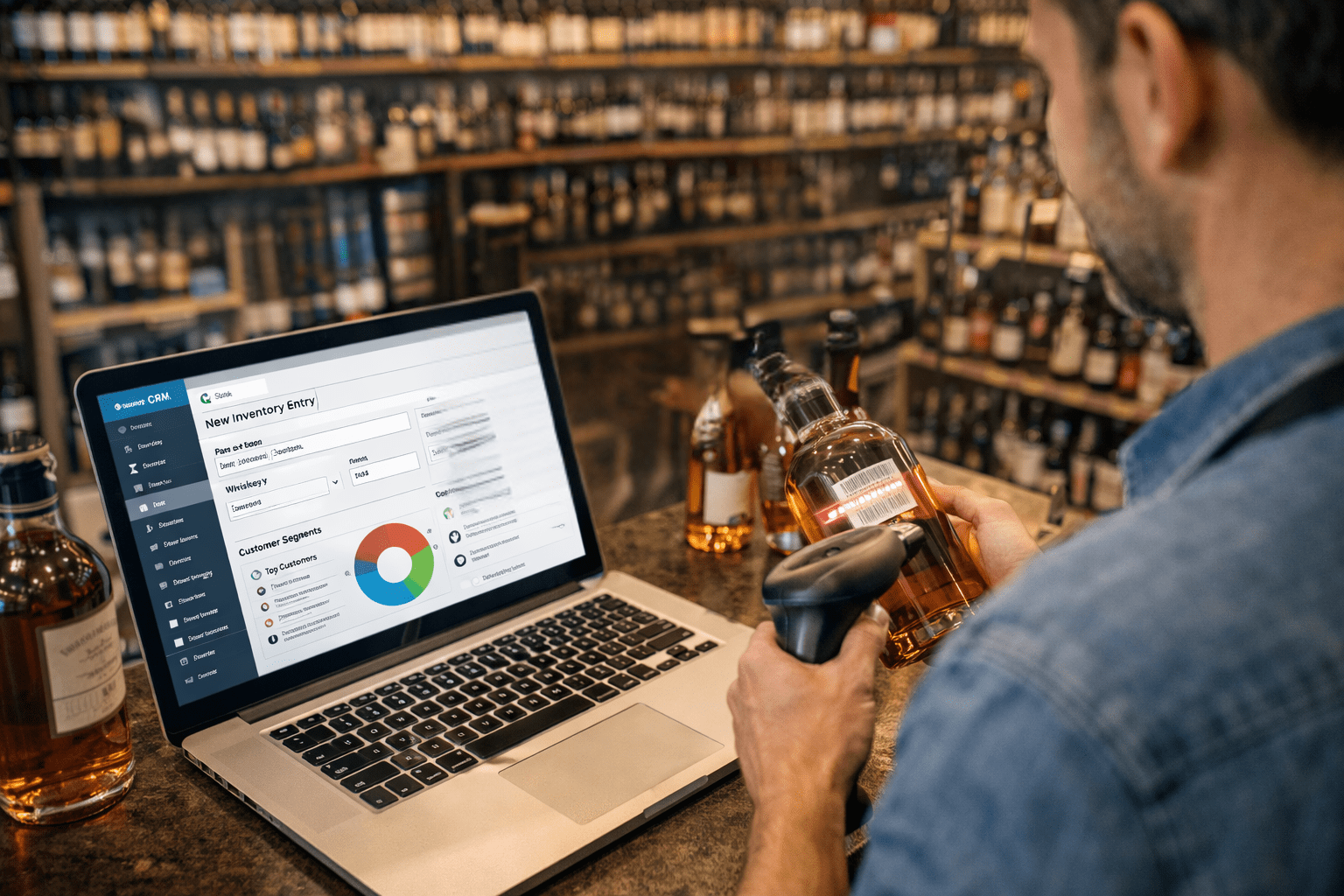
Reinvent Your Liquor Store with Modern CRM
The liquor retail industry is evolving faster than ever, driven by shifting regulations, rising customer expectations, and increasing competition. Store owners today must manage stock precision, MRP variations, supplier performance, bulk orders, and multi-branch operations all while ensuring accuracy and efficiency at the counter. Relying on manual methods or basic software is no longer enough. Modern CRM software is becoming a core necessity for liquor stores that want to streamline operations, improve compliance, and scale their business. Here's how CRM technology transforms liquor store management and why it has become indispensable for retailers.
Smarter Purchasing and Supplier Coordination
Efficient purchasing forms the foundation of a well-run liquor store. Modern CRM systems streamline procurement by organizing supplier details, automating purchase orders, and recording incoming inventory with precision. This gives store owners complete control over their purchase cycle, ensuring optimal stock levels, preventing overbuying, and keeping popular products available at all times.
Centralized Product Information for Seamless Management
Managing hundreds of liquor products is far easier when all information is stored in one place. A CRM with a structured Product Master consolidates every item's detail brand, size, SKU, category, and associated supplier. This central database ensures accuracy across billing, reporting, and inventory processes. For multi-store operations, it also maintains consistency across all locations.
Accurate MRP-Wise Stock and Sales Tracking
Liquor products often vary in price due to regulatory changes or supply updates. CRM software simplifies MRP-based stock management by categorizing inventory according to each MRP and tracking corresponding sales. This reduces pricing errors, enhances billing accuracy, and ensures full regulatory compliance. Store owners can also analyze MRP-specific sales trends to make smarter pricing and stocking decisions.
Real-Time Stock Alerts and Barcode Accuracy
Missing stock at critical times can hurt sales and customer satisfaction. With real-time low-stock alerts, CRM software notifies owners when inventory hits minimum thresholds allowing timely reorders. When paired with barcode-based billing and stock updates, it significantly reduces manual errors, speeds up checkout, and keeps inventory data up-to-date automatically.
Efficient Management of Old and New MRP Stock
Frequent MRP changes can lead to confusion at the point of sale if stock isn't categorized properly. A liquor-focused CRM distinguishes old MRP stock from new MRP batches, ensuring accurate pricing and legal compliance. This clarity also helps retailers plan strategic promotions or discounts to clear older-priced stock before introducing updated price labels.
Streamlined Bulk Order Processing
Bulk and wholesale orders are a major revenue stream for many liquor stores. CRM-driven bulk order management automates complex pricing rules, supports custom invoicing, and tracks large quantities with ease. This eliminates manual mistakes, speeds up large transactions, and enhances customer satisfaction for corporate or wholesale clients.
Unified Data and Live Reporting Across Stores
For retailers managing multiple branches, unified data is crucial for consistent performance. A modern CRM centralizes sales, stock, and operational data from all outlets into one system. Owners can access live dashboards to monitor daily activity, track staff productivity, compare store performance, and make informed decisions from anywhere. This level of visibility promotes business growth and operational excellence.
Conclusion
CRM software is no longer optional for liquor stores it's a necessity for efficient, compliant, and scalable operations. Whether it's improving purchase management, handling MRP variations, or offering real-time insights, a specialized CRM helps liquor store owners operate smarter and grow faster. By embracing a modern software solution, retailers can enhance every aspect of their business and stay ahead in a rapidly evolving market.